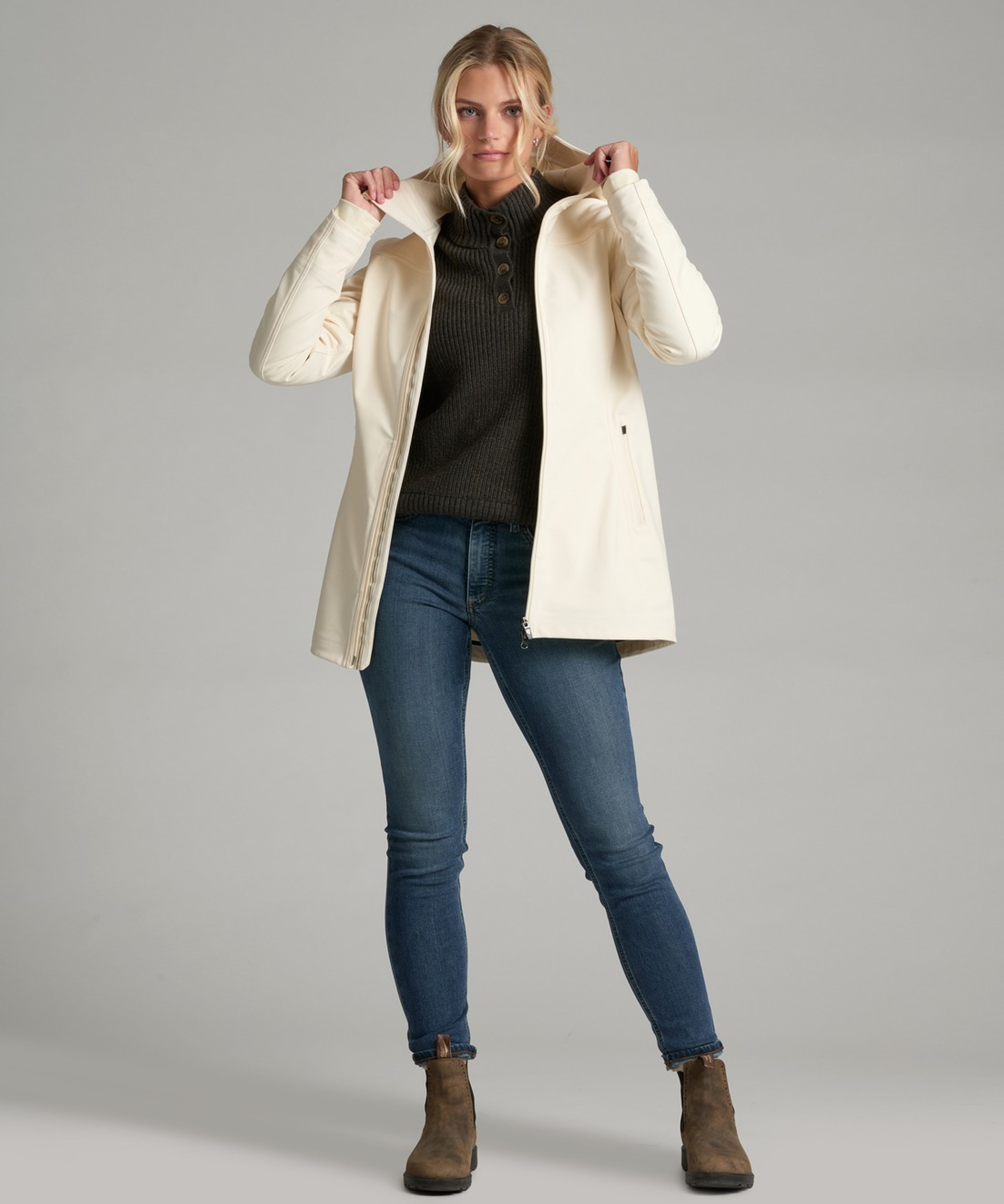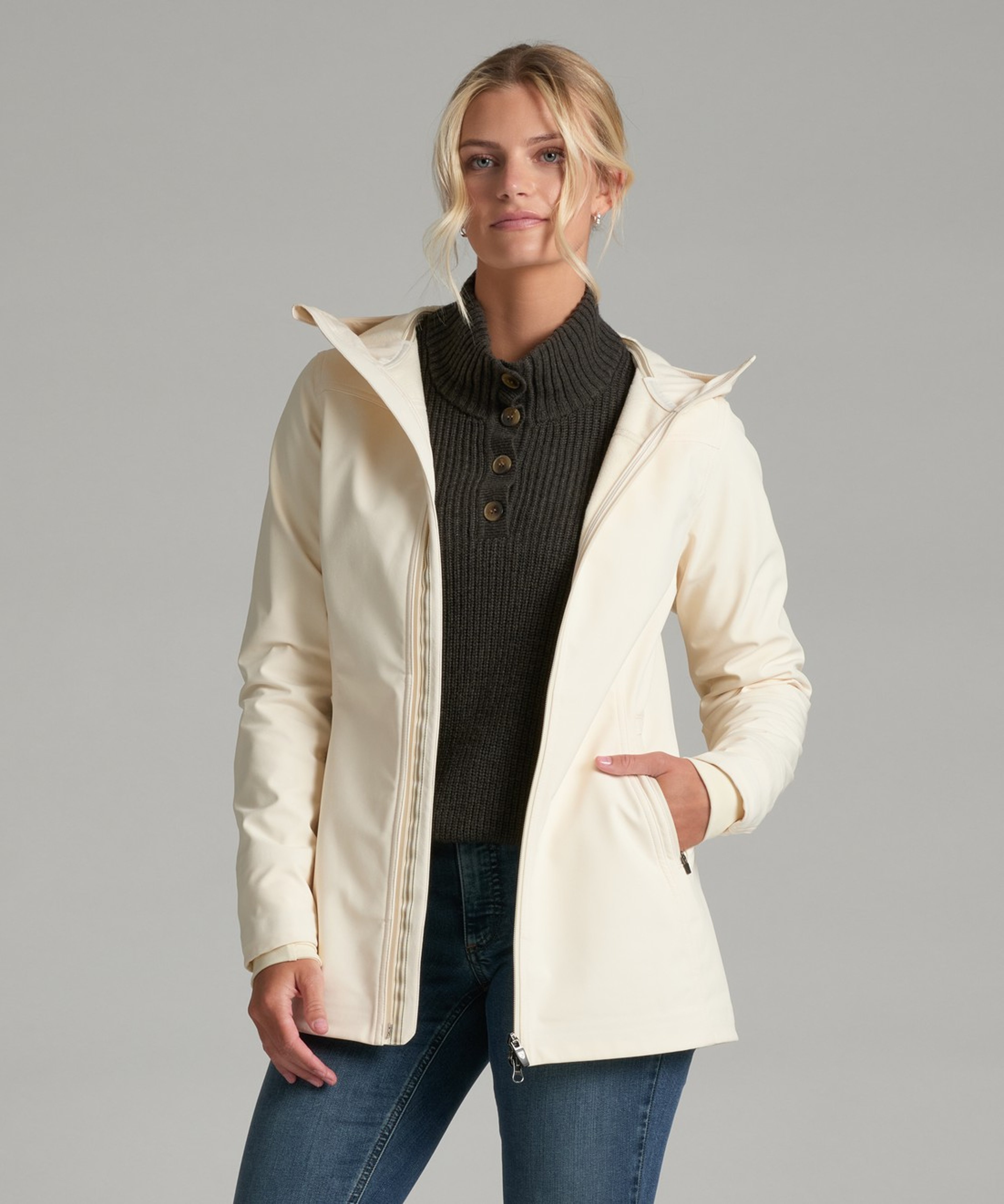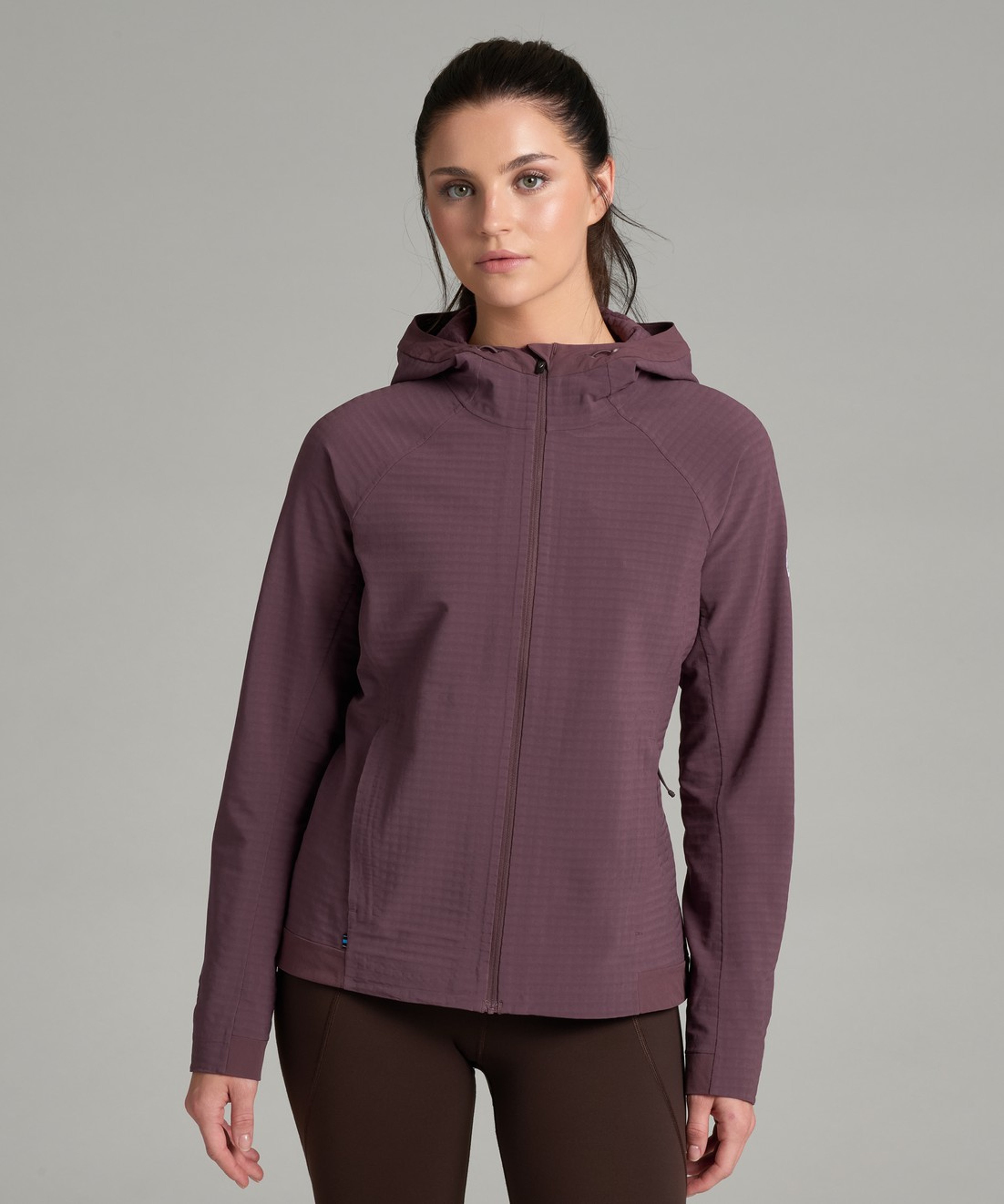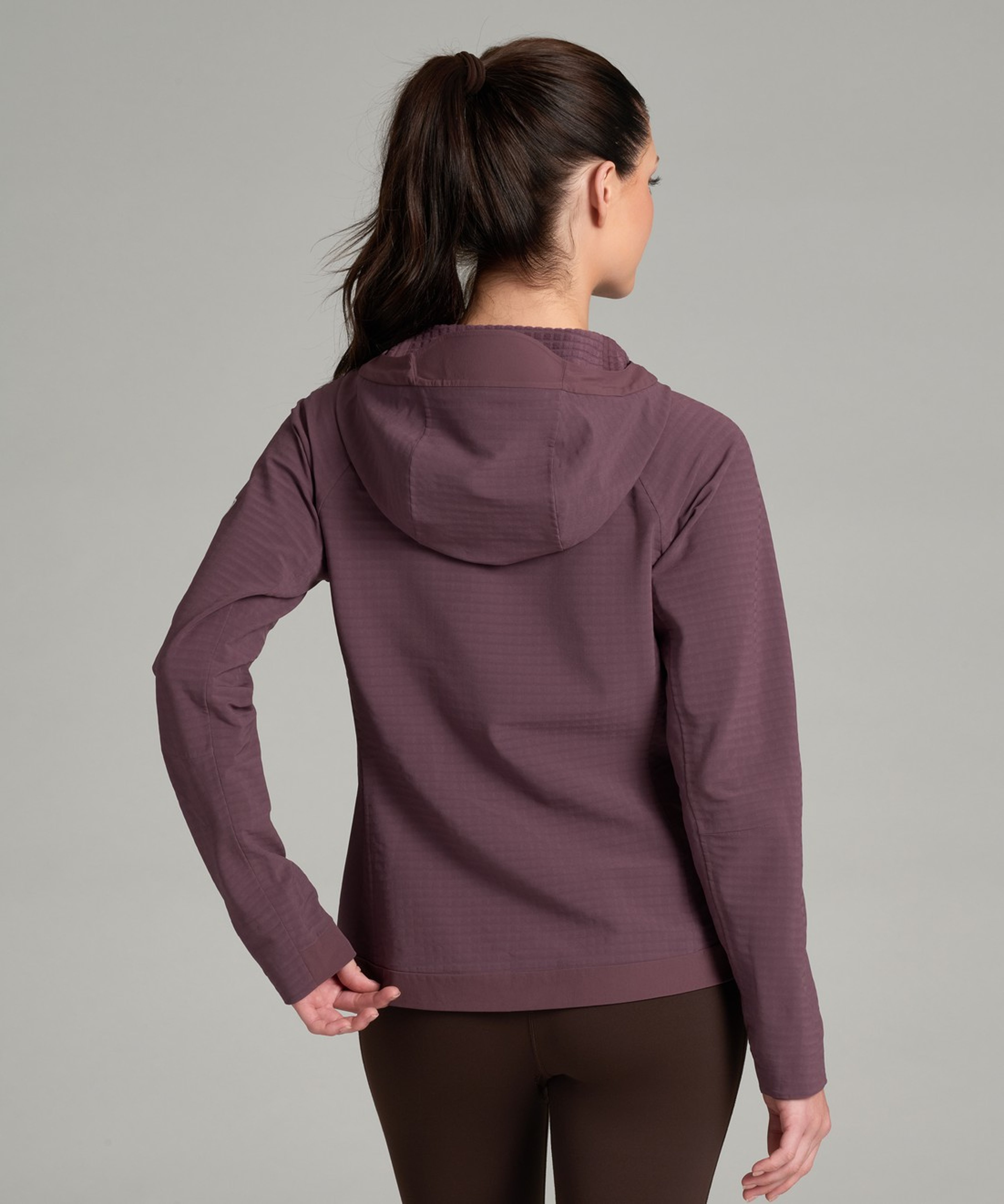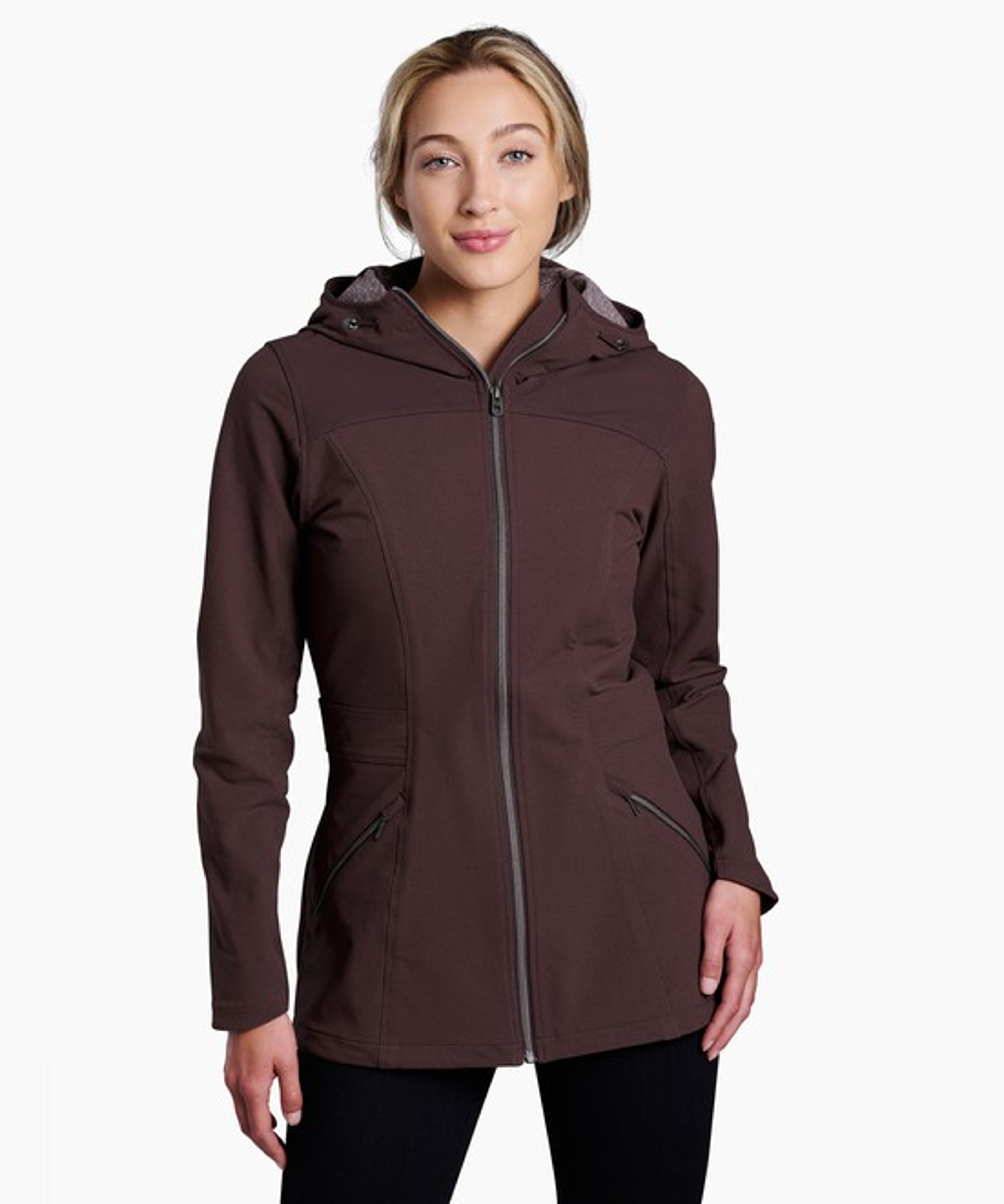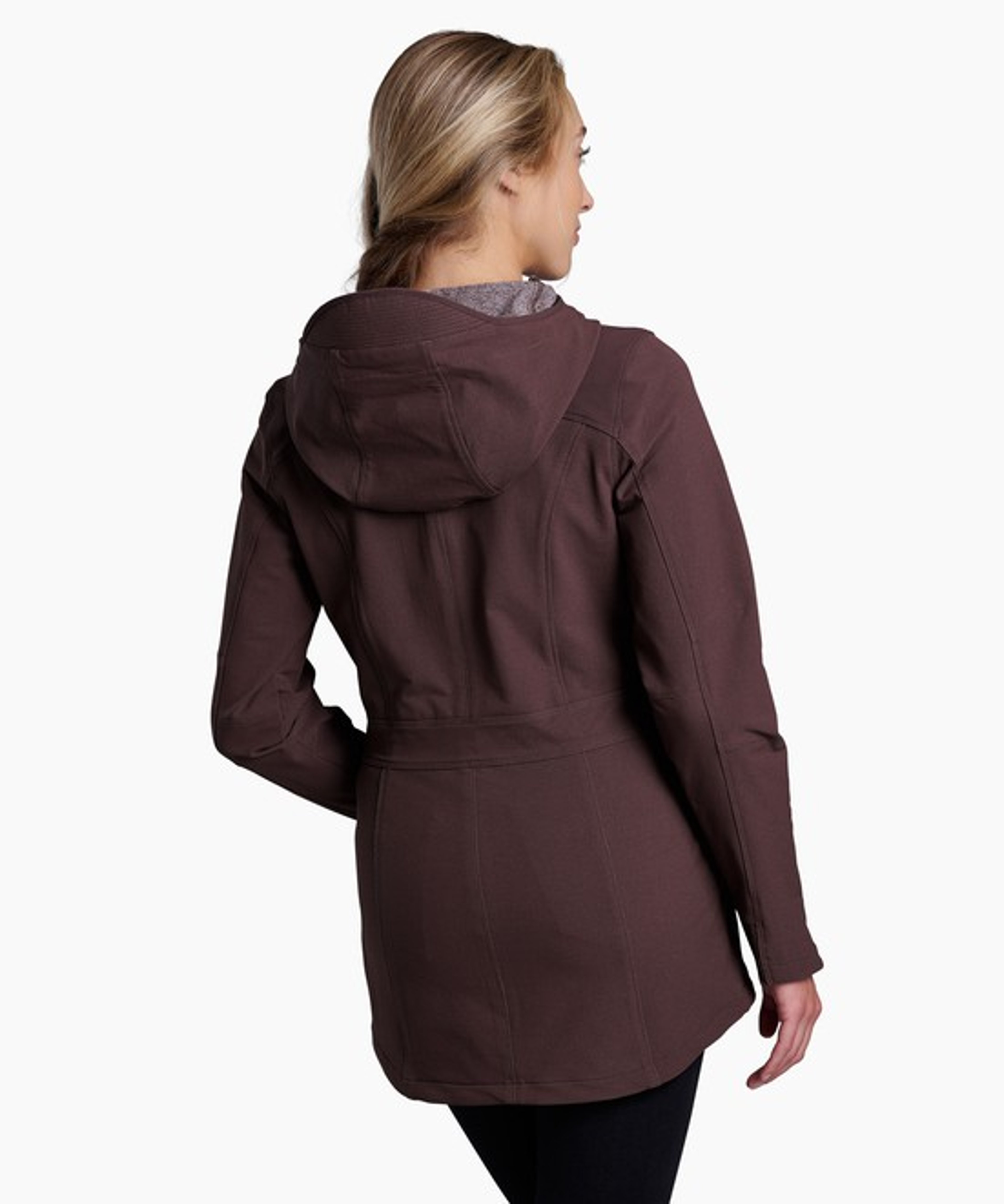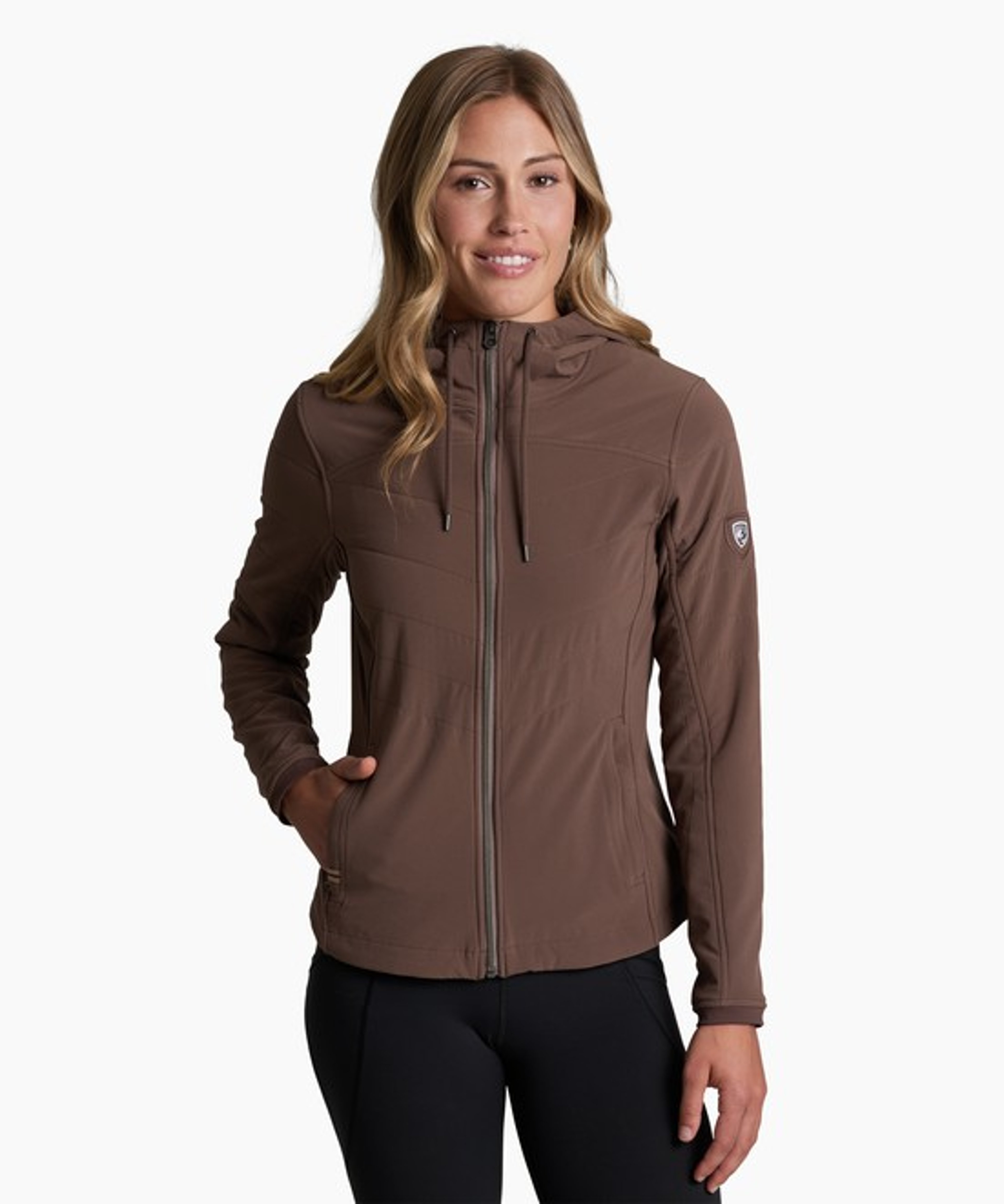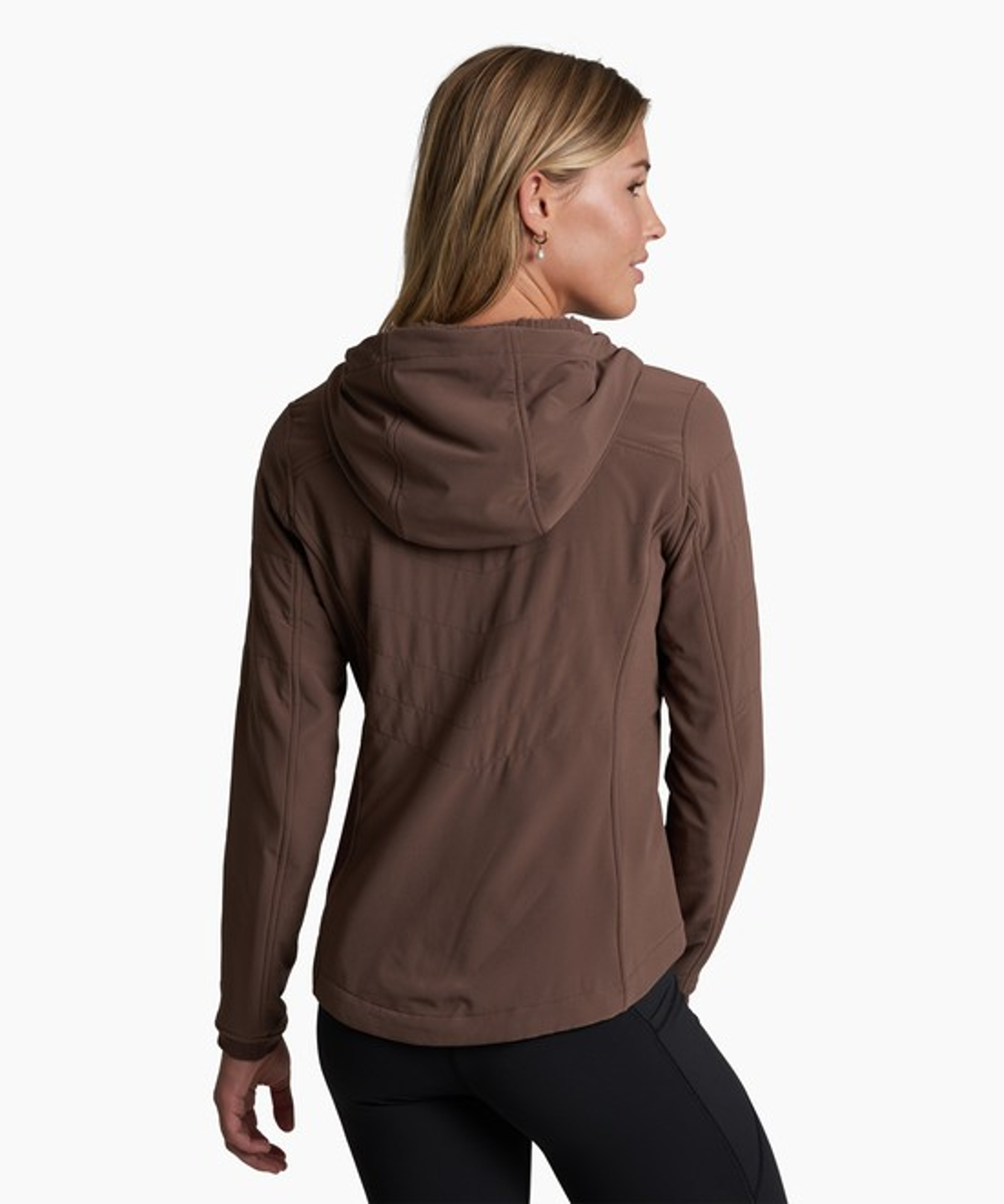




Women's Softshell Outerwear
Move Easy Between Seasons in KÜHL Women's Softshell
Choose from a variety of fabrics, styles, and features for the women's softshell that's right for you:
Three-Season Versatility. A softshell earns its place in your closet by covering the messy middle of the calendar: cool mornings, breezy ridgelines, drizzle that never quite commits to rain. Stretch-woven face fabric with a DWR finish sheds light moisture and blocks wind without the crinkle or stiffness of a hardshell.
Brushed Interior Warmth. For cooler outings, look for softshells with a brushed interior or grid-fleece backer. The structure traps a thin layer of warm air against the body while staying breathable enough for uphill effort, which is why these styles slot in so easily as a standalone layer in shoulder season.
Stretch and Mobility. Softshell construction with 4-way stretch lets the jacket move with you on a scramble, a belay, or a long day behind the wheel. Articulated sleeves keep the hem from riding up when you reach overhead, and thumb loops seal the cuffs against a gust.
Layering System. A softshell is most useful as the middle piece of a three-layer kit. Worn over a baselayer and under a women's rain jacket on wet days, it carries the warmth load without the weight penalty of a down piece. On milder days, it stands alone over a tee.
When choosing your softshell, look for signature touches like thumb loops to seal out the cold, low-bulk seams for easy layering, and a hood cut to fit over a beanie or a helmet. Explore the rest of our women's outerwear collection to round out the kit, or pair this layer with a women's fleece midweight for the deepest weeks of winter.
Choose from a variety of fabrics, styles, and features for the women's softshell that's right for you:
Three-Season Versatility. A softshell earns its place in your closet by covering the messy middle of the calendar: cool mornings, breezy ridgelines, drizzle that never quite commits to rain. Stretch-woven face fabric with a DWR finish sheds light moisture and blocks wind without the crinkle or stiffness of a hardshell.
Brushed Interior Warmth. For cooler outings, look for softshells with a brushed interior or grid-fleece backer. The structure traps a thin layer of warm air against the body while staying breathable enough for uphill effort, which is why these styles slot in so easily as a standalone layer in shoulder season.
Stretch and Mobility. Softshell construction with 4-way stretch lets the jacket move with you on a scramble, a belay, or a long day behind the wheel. Articulated sleeves keep the hem from riding up when you reach overhead, and thumb loops seal the cuffs against a gust.
Layering System. A softshell is most useful as the middle piece of a three-layer kit. Worn over a baselayer and under a women's rain jacket on wet days, it carries the warmth load without the weight penalty of a down piece. On milder days, it stands alone over a tee.
When choosing your softshell, look for signature touches like thumb loops to seal out the cold, low-bulk seams for easy layering, and a hood cut to fit over a beanie or a helmet. Explore the rest of our women's outerwear collection to round out the kit, or pair this layer with a women's fleece midweight for the deepest weeks of winter.
A buyer's guide to women's softshell: what to look for in fabric, fit, and weather protection, and how it stacks up against hardshells and insulated jackets.
What should you look for in women's softshell?
Look for a stretch-woven face fabric with a DWR finish, a breathable backer, and a fit that layers cleanly over a baselayer and a midweight. The best softshells balance wind protection, light water resistance, and freedom of movement. That's the trade-off the category is built around. Pay attention to articulated sleeves, an adjustable hem, and a hood that works with or without a hat. If you'll mostly wear it as a standalone layer in cool weather, prioritize a brushed or grid-fleece interior for added warmth.
What's the difference between a hardshell, softshell, and insulated jacket?
A hardshell is a fully waterproof rain shell, a softshell is a wind- and light-moisture-resistant breathable layer, and an insulated jacket is built to add warmth. Hardshells use a waterproof membrane and taped seams for sustained downpours. That's the job our rain outerwear is built for. Softshells trade absolute waterproofing for stretch, breathability, and quiet comfort, which makes them the better choice for high-output activity in variable weather. Insulated jackets prioritize warmth and pair best over a softshell or under a hardshell when temperatures drop.
How do you choose between down and synthetic insulation?
Choose down for the best warmth-to-weight and packability. Choose synthetic when you expect wet weather or high-output sweat. Down lofts higher per gram and compresses smaller, but it loses insulating power when soaked. Synthetic fills hold most of their warmth wet and dry faster, which is why they're the safer pick for damp climates and aerobic days. Most softshells are uninsulated by design. Layer a piece from our down outerwear underneath when conditions turn cold.
Are softshell waterproof or just water-resistant?
Softshells are water-resistant, not waterproof. The DWR finish sheds light rain, snow, and splashes for a stretch of time, but in sustained or heavy rain the fabric eventually wets through. That's a feature, not a flaw: the breathable face is what lets you climb without soaking yourself from the inside. For real downpours, reach for a membrane-based hardshell with taped seams. Refresh the DWR with a wash-in or spray-on treatment once you notice water stops beading.
How should a softshell fit for layering?
A softshell should fit slim enough to wear over a baselayer but with clear room for a midweight underneath without pulling across the shoulders. Check that you can raise your arms overhead without the hem riding up. Articulated sleeves and a slightly dropped back hem help here. The hood should pull snug over a beanie and still allow head movement. If you plan to wear it under a shell, size so the cuffs don't bunch.
What features matter most when hiking or backpacking?
For hiking and backpacking, prioritize breathability, hand pockets positioned above a hipbelt, and a hood that fits over a hat. Look for stretch through the shoulders so trekking poles and scrambling don't fight the jacket. An adjustable hem seals out wind on exposed ridges, and thumb loops keep cuffs in place under gloves. Packability matters for longer trips. A softshell that compresses small is worth the small weight penalty.